Water dripping from ceiling vent openings is one of the most alarming things a Florida homeowner can find. A drop lands on your shoulder while you are watching TV, or you spot a wet ring forming above the vent grille, and the questions start right away. Is the roof leaking? Is the AC broken? Most of the time, the answer is neither. In Florida’s humid climate, this drip is almost always tied to condensation building up around your ductwork or vent boot. At All Thermo Insulation, we inspect this exact issue in attics across the state every summer, so let’s walk through what is really happening.
What Causes a Ceiling Vent Leaking Water?
Warm, humid attic air meets a cold surface, and moisture forms, the same way a cold glass sweats on a summer afternoon. Around a supply register, a few specific spots tend to be the source:
- An uninsulated or poorly sealed boot – The metal duct boot connecting the vent to the ductwork chills quickly and collects condensation when it is not wrapped.
- Gaps around the register – Small openings let humid room air reach the cold metal directly, dropping the surface below the dew point.
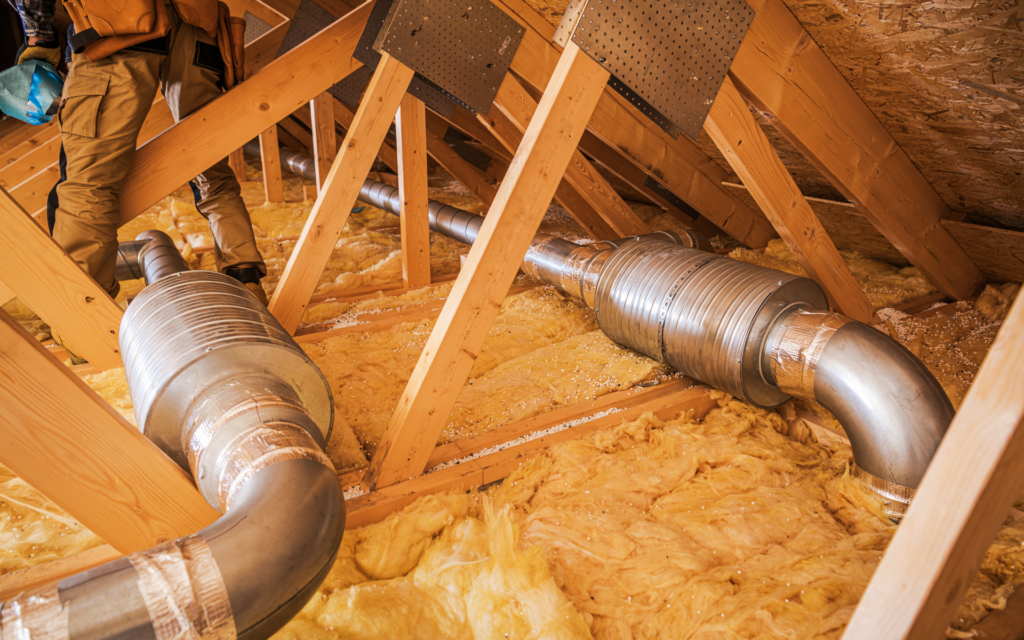
- Damaged duct insulation – Torn or compressed wrap near the vent stops holding warm air away from the cold duct surface.
- High attic humidity – Trapped heat and moisture above the ceiling raise the dew point the duct has to work against.
- A clogged or disconnected condensate line – Though this comes from the AC unit itself rather than the ductwork, it can drip through a nearby vent opening and look identical to duct condensation.
What Are the Warning Signs to Watch For?
Catching the problem early keeps a small drip from becoming a bigger repair. Look for:
- A brown stain around ceiling vent grilles, even a faint one
- A water stain around air vent openings that grows after each hot, humid day
- Active drips, sometimes described as an AC vent dripping water directly onto furniture or flooring
- A musty odor near supply registers
- Bubbling or peeling paint on the ceiling close to the vent
- Soft or sagging drywall around the register
Any one of these points to moisture building up faster than it can dry.
Why Does a Leaking AC Register Matter Beyond the Stain?
A single drip seems small, but the moisture behind it rarely stays contained. Left unaddressed, a leaking ac register can lead to:
- Mold growth inside the ceiling cavity and on the duct boot itself
- Weakened drywall that eventually needs full replacement
- Rusted metal ductwork and shortened duct life
- Higher indoor humidity and reduced comfort in the room below
- Wasted cooling energy as your AC works against wet, poorly insulated ducts
Florida’s rainy season and peak summer humidity push outdoor moisture into attics through vents, gaps, and poorly sealed roof penetrations. That extra humidity raises the dew point around your ductwork, so a vent that stays dry in spring can start dripping once summer humidity settles in.
How Do You Stop the Drip for Good?
The right approach depends on where the moisture is coming from, but Florida homes typically need a combination of these repairs.
- Insulate and seal the boot. Wrapping the metal boot and sealing every seam keeps its surface temperature above the surrounding dew point.
- Check the register seal. A tight, gap-free connection between the vent and ceiling stops warm room air from reaching cold metal.
- Replace damaged duct wrap. Fresh insulation restores the barrier between warm attic air and the cold duct surface.
- Improve attic ventilation. Better airflow lowers overall attic humidity, which reduces condensation risk across the whole duct system.
- Inspect the condensate line. A clear, properly sloped line prevents AC unit water from finding its way to a nearby vent.
- Schedule a full duct inspection. A technician can trace the exact source rather than guessing from the stain alone.
Each repair supports the others. Sealing one register will not help if the whole duct run is under-insulated, and fresh insulation will not last if attic humidity stays high. A full inspection looks at the boot, the register, the duct wrap, and the attic environment together.
Get Your Ductwork Checked Before the Next Humid Stretch
Florida’s warm months bring the attic humidity that makes ceiling vent condensation worse, so this is the right time to have your ductwork looked at before the next stretch of heat and rain arrives. All Thermo Insulation’s AC ductwork services cover boot insulation, vapor barrier repair, and full attic humidity reviews built around Florida’s climate.
If water dripping from ceiling vent openings has become a pattern in your home, the cause is almost always fixable once it is properly diagnosed. Get started today and schedule an inspection so the drip, the stain, and the moisture behind it get handled before mold has a chance to take hold.