R value for attic insulation Florida homeowners need depends heavily on where in the state you live, since the Florida Building Code splits the state into two separate climate zones with different minimums. Getting this number wrong, in either direction, means paying for insulation you don’t need or leaving your attic under-protected against Florida’s heat. At All Thermo Insulation, we measure existing insulation depth and compare it against code requirements before recommending any project. Here is what the numbers actually mean for your home.
What Is R-Value and Why Does It Matter in Florida?
R-value measures thermal resistance, or how well a material slows heat moving through it. A higher R-value means slower heat transfer, which keeps more of the heat building up in your attic from reaching the living space below.
- Florida attics face near-constant heat exposure for most of the year.
- Weak or thin insulation lets that heat pass through into the ceiling and living space.
- Your AC system then works harder to offset heat gain that better insulation would have blocked.
- The right R-value for your climate zone gives your attic a real chance to slow that heat transfer before it reaches your rooms.
What Do Florida Building Code Insulation R-Value Rules Actually Require?
Florida building code insulation r value requirements come from the Florida Building Code, Energy Conservation edition, which divides the state into two climate zones.
- Climate Zone 1 covers most of South Florida, including counties across the southern tip of the state.
- Climate Zone 2 covers Central and North Florida, the remaining counties statewide.
- Zone 1 sets a minimum ceiling insulation level of R-30.
- Zone 2 sets a minimum ceiling insulation level of R-38.
- These figures apply to the insulation material itself and do not include any thermal resistance from drywall or roof decking.
Confirming your specific climate zone through your county building department gives you the exact minimum that applies to your address.
R-38 vs R-30 Florida: Which One Applies to Your Home?
R-38 vs R-30 Florida questions come up constantly, since South Florida homeowners sometimes assume the higher number automatically applies statewide.
- R-30 is the Zone 1 minimum, covering most South Florida counties.
- R-38 is the Zone 2 minimum, covering Central and North Florida.
- Some Zone 2 homes can meet the R-38 requirement using R-30 material, as long as it covers the full ceiling area and extends over the top plates at the eaves, since that shallow eave space often cannot fit thicker insulation.
- Many builders and insulation contractors install R-38 even in Zone 1 homes, since going above the minimum tends to improve comfort and reduce cooling demand further.
Knowing which number is your code minimum, and which number might serve your home better, are two separate questions worth asking during an assessment.
Recommended R Value Florida Attic Guidance Beyond Code Minimums
Recommended r value florida attic guidance from national sources sometimes runs higher than the state’s code minimum. The Department of Energy publishes general insulation recommendations by climate zone, and Florida’s hot, humid conditions place it firmly in the range where higher R-values continue to improve performance.
- Code minimums represent a floor, not a ceiling, for what your attic can support.
- Homes with poor attic ventilation or significant duct leakage often benefit from insulation above the minimum.
- Older homes with settled or compressed insulation may already be performing well below their original R-value, even if it once met code.
- A hands-on inspection tells you whether your current insulation still performs anywhere close to its rated value.
How Much Insulation in a Florida Attic Actually Reaches These Numbers?
How much insulation in Florida attic spaces is needed depends on the insulation type, since different materials reach the same R-value at different depths.
- Blown-in cellulose and fiberglass require greater depth to reach higher R-values compared to denser materials.
- Spray foam, particularly closed-cell foam, reaches a given R-value using less material thickness.
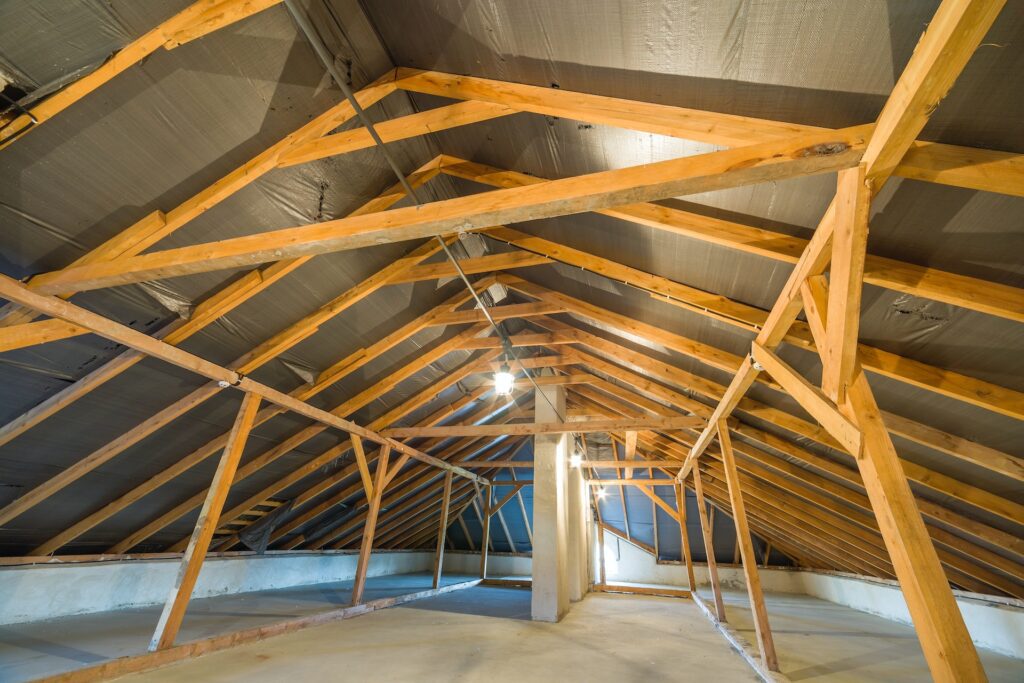
- Attic depth and roofline shape can limit how much material physically fits in certain areas, particularly near the eaves.
- Ductwork and equipment already inside the attic can also affect how evenly insulation gets distributed across the space.
Why Attic Insulation Depth Matters as Much as the R-Value Number
Attic insulation depth tells you more about actual performance than a stated R-value alone, especially in older attics.
- Insulation that has settled, compressed, or shifted over time loses depth, and loses R-value along with it.
- Water damage, pest activity, or foot traffic in the attic can flatten insulation in specific areas, creating gaps in coverage.
- Measuring depth directly, rather than relying on the original installation date, gives an accurate read on current performance.
- A consistent, even depth across the entire attic floor matters more than a single deep spot near the access hatch.
Get Your Attic Measured Against the Right Standard
R value for attic insulation Florida homes need is not a single number that applies everywhere in the state, and guessing at it can leave your attic under-protected or lead to paying for more material than your climate zone requires. All Thermo Insulation’s attic insulation team measures your current depth, confirms your climate zone, and compares your attic against the Florida Building Code minimum before recommending a plan.
If you are not sure whether your attic meets Zone 1 or Zone 2 requirements, or whether your insulation has settled below its original rating, contact us today and schedule an assessment before the next season puts your attic’s R-value to the test.