When you first start planning an acoustical ceiling upgrade, it’s natural to ask, “What should I expect to pay?” Understanding acoustical ceiling costs early in the process helps you set a realistic budget, avoid surprises, and choose options that support both performance and aesthetics. At All Thermo Insulation, we walk clients through these cost drivers every day so they can make confident, informed decisions.
An acoustical ceiling does much more than hide ductwork and wiring. It helps control sound, improves comfort, and can even boost the overall look and value of your space. Whether you’re designing a new office, refreshing a retail store, or upgrading a home theater, knowing what affects pricing will help you match your goals to your budget.
Below are the main factors that influence the total cost of an acoustical ceiling project and how you can plan ahead for each one.
What Is an Acoustical Ceiling?
Before diving into the numbers, it helps to understand what you’re actually paying for. An acoustical ceiling (often called a drop ceiling or suspended ceiling) typically includes:
- A suspension grid system that hangs from the structural ceiling
- Acoustical tiles or panels that rest in the grid
- Accessories like trim, molding, and any required bracing or seismic components
Together, these parts create a clean, finished surface that absorbs or blocks sound, conceals mechanical systems, and allows future access for maintenance.
1. Material Type and Quality
One of the biggest influences on acoustical ceiling costs is the material you choose for the tiles and grid:
- Basic mineral fiber tiles are often the most budget-friendly and work well for standard offices, classrooms, and many commercial spaces.
- Fiberglass and high-performance tiles typically cost more but provide better sound absorption, moisture resistance, or mold resistance.
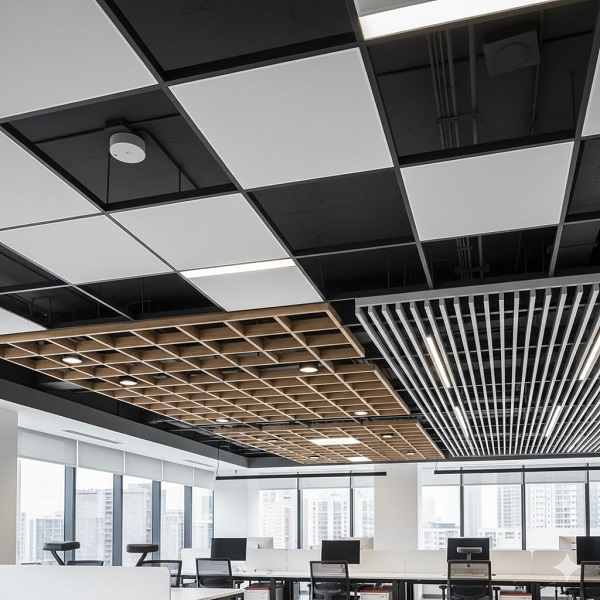
- Metal, wood, and specialty panels offer a premium look and unique design possibilities but come with a higher price tag.
Higher-quality materials may cost more upfront, but they can deliver better acoustics, durability, and long-term value, especially in busy or noise-sensitive environments.
2. Room Size and Layout
The overall size and shape of the space plays a major role in project cost. Larger rooms require more tiles, more grid material, and more labor hours. Complex layouts add additional challenges:
- Angled walls or unusual shapes create more cutting and fitting.
- Multiple rooms or zones often need extra transitions and detailing.
- Soffits, bulkheads, and level changes increase installation time.
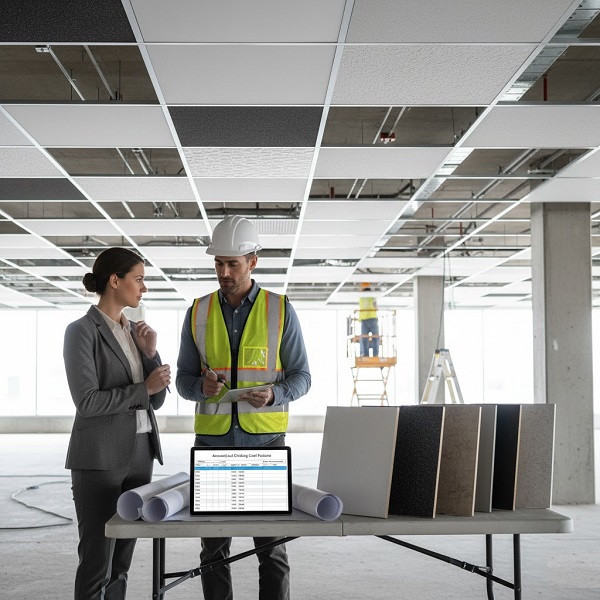
When you request a quote from All Thermo Insulation, accurate measurements and floor plans help us give you realistic pricing tailored to your space.
3. Ceiling Height and Accessibility
How easy is it for installers to access your ceiling? That answer also affects acoustical ceiling costs:
- Low, open areas are faster to work in and usually cost less per square foot.
- High ceilings may require lifts or scaffolding, increasing labor and equipment costs.
- Tight, cluttered, or occupied spaces take longer because crews must work carefully around furniture, machinery, or people.
In some cases, scheduling installation after hours or in phases can manage disruption but may slightly increase labor cost due to overtime or special scheduling.
4. Existing Conditions Above the Ceiling
The condition of what’s already above your head can either simplify or complicate your project:
- Old or damaged ceiling systems may need to be removed and hauled away.
- Exposed wiring, pipes, and ductwork may require coordination with other trades.
- Structural issues or water damage might need repair before a new ceiling goes in.
A thorough site visit allows All Thermo Insulation to spot these potential issues early, so they’re reflected in your budget rather than becoming surprise change orders later.
5. Acoustic Performance Requirements
Not every space needs the same level of sound control. Your target noise reduction and privacy goals will influence both material choice and overall cost:
- Open offices and classrooms may need high sound absorption to reduce echo and background noise.
- Private offices, exam rooms, and conference spaces often need better sound blocking for speech privacy.
- Special-use rooms like recording studios or theaters may require advanced designs, additional insulation above the ceiling, or layered systems.
To explore how different ceiling materials perform, you can review independent lab data and performance ratings from a reputable acoustical ceiling standards or manufacturer guide. This helps you see where it makes sense to invest more for better acoustic results.
6. Added Features and Integration with Other Systems
Acoustical ceilings often work hand-in-hand with lighting, HVAC, sprinklers, and other building systems. The more integration required, the more careful planning and labor your project will need:
- Recessed lights, air diffusers, and speakers require cutouts and coordination.
- Seismic bracing, fire-rated assemblies, or cleanroom requirements may add hardware and specialized installation steps.
- Decorative elements like clouds, baffles, or perimeter details raise both material and labor costs but can dramatically elevate the look of the finished space.
When we design a ceiling system at All Thermo Insulation, we look at all these elements together so the final result is practical, safe, and visually clean.
7. Labor Rates and Project Timeline
Labor is a major part of acoustical ceiling costs. Several factors influence installation pricing:
- Local wage rates and any union requirements
- Project complexity and special safety requirements
- Compressed schedules or weekend/night work to avoid disruption
If your timeline is flexible, you may be able to reduce costs by avoiding rush schedules. Planning ahead also ensures materials arrive on time and crews can work efficiently.
8. How to Build a Realistic Budget
With so many variables, how do you create a budget that actually reflects your project? Here are a few practical steps:
- Define your priorities. Decide where performance matters most: sound control, aesthetics, durability, or all three.
- Ask for itemized quotes. Request a breakdown showing materials, labor, and any optional upgrades.
- Compare systems, not just prices. A slightly higher quote may include better-performing tiles, a stronger grid, or additional insulation that pays off over time.
- Plan for contingencies. Set aside a small percentage of your budget for unexpected issues uncovered during install.
To see how an acoustical ceiling fits into your broader comfort and efficiency goals, you can also review All Thermo Insulation’s Interior Insulation Services page and explore related upgrades that complement your ceiling project.
9. When Paying More Makes Sense
It can be tempting to choose the lowest bid, but acoustical ceilings are a long-term investment. In many settings, spending a bit more upfront pays off through:
- Reduced noise complaints and increased productivity
- A more professional, polished appearance
- Better durability and fewer replacements over time
- Easier access for maintenance without damaging tiles
In spaces where first impressions and daily comfort matter—like reception areas, conference rooms, classrooms, and healthcare facilities—high-quality acoustical ceilings can make a noticeable difference.
Partner with All Thermo Insulation for Your Acoustical Ceiling Project
Budgeting for an acoustical ceiling doesn’t have to feel overwhelming. When you understand the factors that drive acoustical ceiling costs—materials, room size, accessibility, existing conditions, acoustic performance, integration with other systems, and labor—you can make smarter choices instead of guessing.
All Thermo Insulation is here to guide you through each step, from initial assessment and design recommendations to professional installation and follow-up. If you’re ready to discuss options, request a detailed quote, or explore ways to balance performance and budget, contact the team at All Thermo Insulation today.